
Security has a timing problem. An exploited WordPress flaw opens during an upgrade, a browser session defense changes what happens when a cookie expires, and Vercel is moving code review to the moment code is pushed. In hardware, OpenAI shows how much of a prototype an agent can help design and where a manufacturer still needs people.
WordPress upgrades are the exposure window
CISA added CVE-2026-119977 to its Known Exploited Vulnerabilities catalog on November 3. The Canadian Centre for Cyber Security identifies WordPress Core versions before 7.1.4 as affected. The Hacker News explains the race: predictable, web-accessible staging files during a full-package upgrade can briefly give an unauthenticated attacker a route to execute code. The vulnerability was patched in late October; the new development is the exploitation confirmation and November 4 reporting. [1][2][3]
The Hacker News reports that Wordfence blocked 12,632 attempts in the preceding 24 hours. Blocked attempts describe activity observed by that provider. They do not count compromised sites. Check the actual core version in each environment, follow the vendor guidance, and investigate suspicious activity where exposure overlapped an upgrade. A successful update closes the vulnerable path but does not settle what happened before it. [3][2]
Cloudflare puts vulnerability evidence in one place
Zero Wire is a public feed in Cloudflare Radar for significant vulnerabilities in internet-facing software. Briefings summarize applicability, exploitation evidence and remediation, then link to vendor guidance. The feed separates issues that need attention from reference entries. A move into reference means the guidance has stabilized, while individual deployments can still need attention. [4]
Vercel moves review to the push and binds session renewal
Vercel Security Review is in public beta for Pro and Enterprise teams. When enabled, it reviews pushes to connected GitHub repositories, including direct pushes and force pushes. Findings carry a commit, environment and AI-assigned severity. A suggested fix can become a pull request for approval. The scope is source analysis, with runtime and penetration testing outside the review. [5]
Separately, Malte Ubl says Vercel began a gradual rollout of device-bound sessions on November 3. Chrome’s design uses a short-lived cookie and asks the browser to prove possession of a private key when renewing it. Secure hardware protects the key where supported. This constrains off-device replay after the cookie expires. Malware on the original device, fallback behavior and enrollment still matter. [6][7]
The November 2 deployment card is a useful example of a different change in the same tooling. Compatible MCP Apps clients can show status, build logs and the deployment link together. Clients without the extension get text. Showing a deployment’s status and reviewing the code that produced it are separate capabilities. [8][5]
What an agent can take from CAD to a prototype
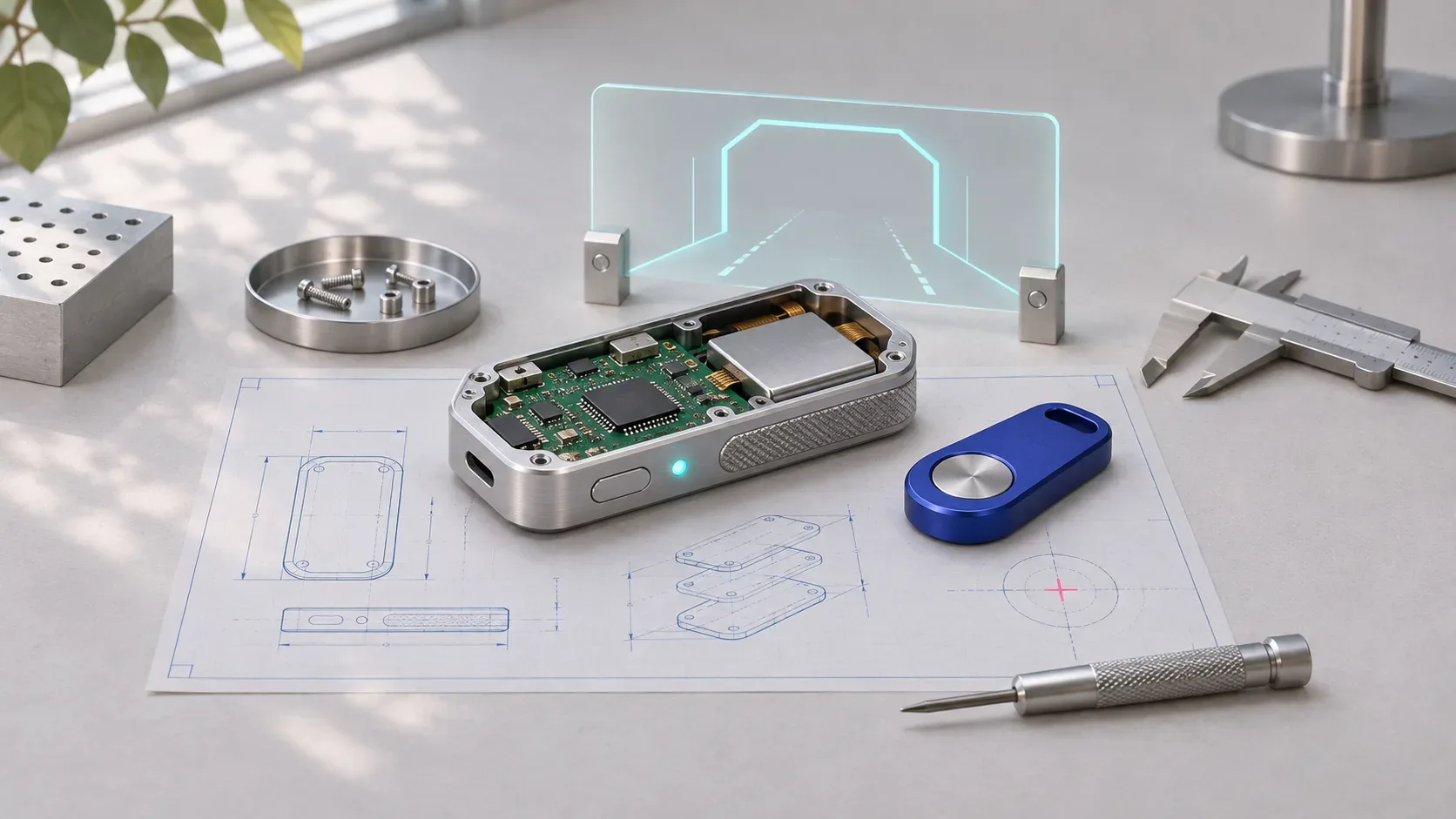
OpenAI describes a test device for talking to Codex. It used Astra across enclosure design, board layout, firmware and the interface. Two team members worked on the test device in under a week as a side project. A contract manufacturer built a small batch in under a month. Preparing for production still required reviews and revisions for tolerances, assembly and the manufacturer’s limits. Those are the points to measure if you want to repeat the experiment in a real shop. [9]
OpenAI also reports BenchCAD 2.0 scores of 0.594 for Astra at its highest reasoning setting and 0.875 for a newer internal model. BenchCAD covers tasks such as reconstructing parts and identifying circuit-board connections. These are company-reported benchmark scores. The newer model is described as internal, and neither score measures whether a prototype survives assembly or passes a safety review. [9]
A model endpoint, a business definition and a trace
Alchemy announced an inference API for open-weight Kimi, GLM and DeepSeek models. Its product page says admission is gradual and pricing and limits are available once an account opens. Zero data retention is the company’s stated policy. Teams comparing services still need to measure cost per accepted result, including retries, and verify the applicable terms. [10][11]
NVIDIA’s Auto-Ontology illustrates the difference between fetching rows and knowing what they mean. The Python project maps business terms to data, lets people review definitions, and exposes answerability checks and read-only queries through MCP. A certified revenue measure can carry an approved definition across tools, but the team still has to settle which definition is correct for the question. [12]
The MCP TypeScript SDK’s OpenTelemetry change merged October 31 on the v2 line. It adds request and notification spans, duration metrics and trace propagation. Applications need an active telemetry SDK to collect the signals. A merged change is evidence of implementation; check the installed package version before relying on it. [13]
Mercury Desktop’s November 3 update makes the selected speech provider consistent across reading replies and voice typing. Its release notes say Gemini can handle both with a Gemini key. The Optimus microphone panel also shows whether an update succeeded, failed, or found no newer version. Microphone access and the choice of speech provider are separate settings to check before using a desktop agent with sensitive audio. [14]
New models and app actions have different release gates
Tencent introduced Hy4 with image understanding and computer use, including command-line and graphical interfaces. Its announcement describes training on Blender and CAD and says model weights and system cards are planned for the coming days. Hosted availability and a planned weight release are different milestones. [15]
Sarvam Prism makes a narrower bet: return probabilities over fixed choices instead of generating an explanation. Sarvam reports a median of 44 milliseconds on a B200 in its test, with an average index score of 71.8. Mammoth scored 75.2 at 284 milliseconds in the same comparison. The numbers are vendor measurements of one request at a time, and the combined score includes Sarvam’s own benchmarks. They describe a trade-off, not a production throughput estimate. [16]
Apple opened a developer preview for app actions and content in Siri AI through App Intents. Apps can expose individual actions or combine several into a skill. The preview runs on eligible hardware and operating-system betas. Apple says customer shipping is a few months away and App Store submission opens in spring. Developers can test an integration now while planning separately for public distribution. [17]
Stolen model access becomes a billing problem
Google’s November 2 threat report describes stolen credentials and exposed endpoints being used to resell model access. In the incidents its team investigated, fraudulent charges exceeded $100,000 in a day, with some organizations reaching $1 million cumulatively. These are observed cases rather than typical costs. Separating credentials by workload and watching billing alongside authentication helps connect unexpected usage to the account that generated it. [18]
Data-center votes have different legal effects
Early local returns showed strong support for Alhambra’s Measure DB. The city says the measure would define and prohibit data centers in all zones. The local report describes the count as preliminary. Ballotpedia’s wider tracker also lists advisory questions and temporary moratoria, which have different effects from an ordinance. Read the measure and the local count together before comparing outcomes across cities. [19][20][21]
References & Works Cited
21 SOURCES-
CISA (2026-11-3). CISA adds one known exploited vulnerability to catalog.
https://www.cisa.gov/news-events/alerts/2026/11/03/cisa-adds-one-known-exploited-vulnerability-catalog -
Canadian Centre for Cyber Security (2026-11-3). WordPress security advisory AV26-1117.
https://www.cyber.gc.ca/en/alerts-advisories/wordpress-security-advisory-av26-1117 -
Ravie Lakshmanan (2026-11-4). CISA confirms hackers exploiting WordPress core flaw during software upgrades.
https://thehackernews.com/2026/11/cisa-confirms-hackers-exploiting.html -
Daniele Molteni and Celso Martinho (2026-11-3). Introducing Zero Wire.
https://blog.cloudflare.com/zero-wire/ -
Vercel (2026-11-3). Vercel Security Review now in public beta.
https://vercel.com/changelog/vercel-security-review-public-beta -
Malte Ubl (2026-11-3). Vercel starts rolling out Device Bound Session Credentials.
https://x.com/cramforce/status/2117645359082315988 -
Chrome for Developers (n.d.). Device Bound Session Credentials.
https://developer.chrome.com/docs/web-platform/device-bound-session-credentials -
Josh Souphanthong and Nathan Manousos (2026-11-2). Vercel MCP now renders deployments as an interactive card.
https://vercel.com/changelog/monitor-vercel-deployments-in-chatgpt -
OpenAI (2026-11-3). Accelerating engineering for the physical world.
https://openai.com/index/accelerating-engineering-for-the-physical-world/ -
Alchemy Compute (2026-11-3). Alchemy Inference launch announcement.
https://x.com/AlchemyCompute/status/2117680809377501453 -
Alchemy (n.d.). Alchemy Inference.
https://inference.alchemy.com -
NVIDIA (n.d.). Auto-Ontology.
https://github.com/NVIDIA/auto-ontology -
Model Context Protocol TypeScript SDK (2026-10-31). Built-in OpenTelemetry tracing and metrics.
https://github.com/modelcontextprotocol/typescript-sdk/pull/3115 -
Mercury Agent (2026-11-3). Mercury v1.5.1.
https://github.com/cosmicstack-labs/mercury-agent/releases/tag/v1.5.1 -
Tencent (2026-11-4). Tencent launches Hy4.
https://www.tencent.com/tencent-launches-hy4-joining-the-ranks-of-the-worlds-leading-open-source-ai-models/ -
Sarvam AI (2026-11-3). Introducing Sarvam Prism.
https://www.sarvam.ai/blogs/sarvam-prism -
Apple (2026-11-3). Siri AI is now open to all developers.
https://developer.apple.com/news/?id=gdk2umrf -
Google Threat Intelligence Group and Mandiant (2026-11-2). The rise of LLMJacking.
https://cloud.google.com/blog/topics/threat-intelligence/llmjacking-monetizing-compromised-cloud-models/ -
City of Alhambra (n.d.). November 3 ballot measures.
https://www.alhambraca.gov/175/Ballot-Measures -
Colorado Boulevard News Desk (2026-11-3). Local election results.
https://www.coloradoboulevard.net/local-election-results/ -
Ballotpedia (n.d.). Data center-related ballot measures, 2026.
https://ballotpedia.org/Data_center-related_ballot_measures%2C_2026